Why Is My Dog Panting in the Car? 5 Things to Check
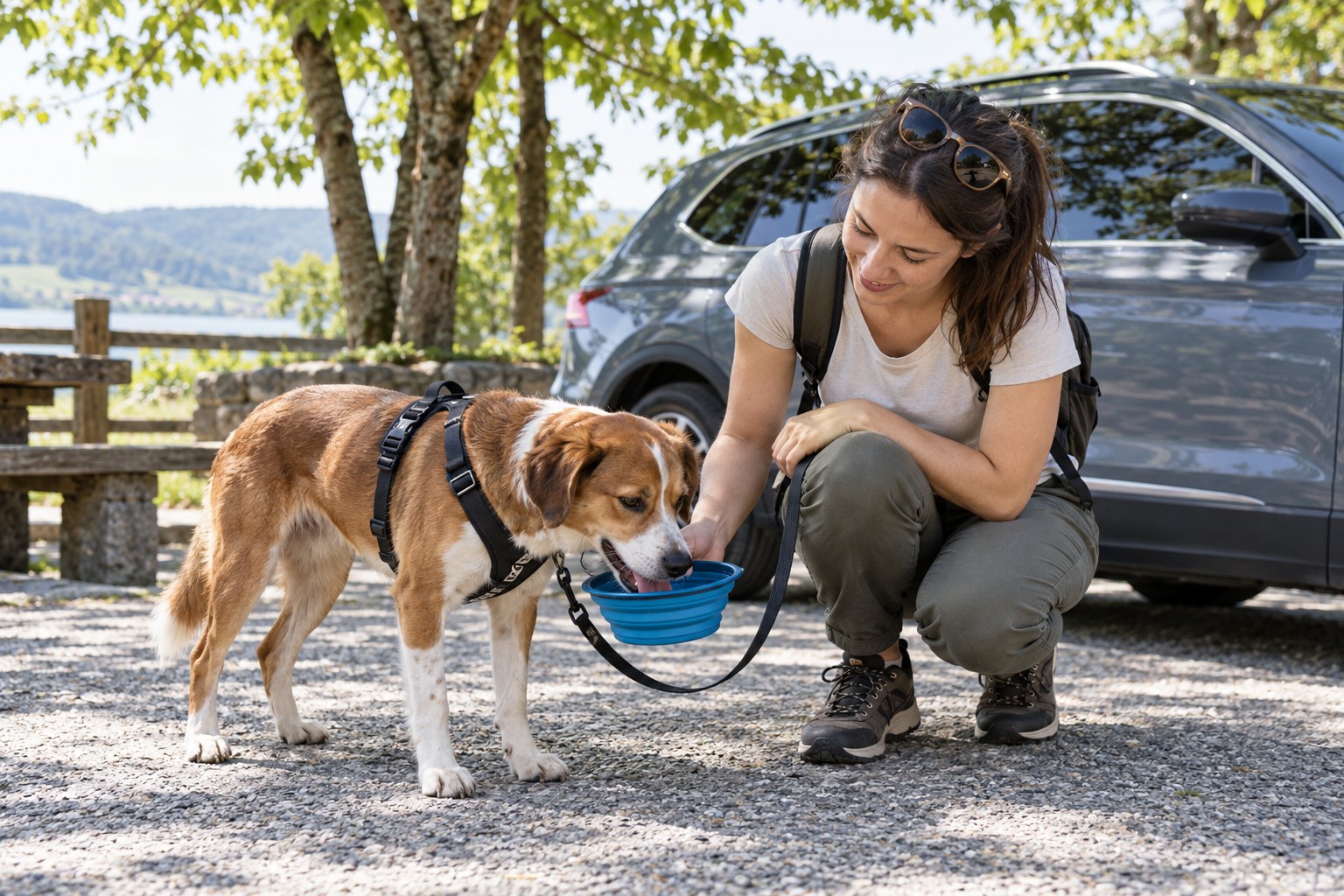
AI-generated illustration of a supervised water break in the shade.
Panting can be a normal cooling response, but it can also accompany excitement, stress, pain, motion sickness or illness. Check the cabin temperature, what happened just before the panting, the dog's other symptoms, recovery after a safe stop and whether the pattern is new for that dog.
In this guide
1. Check heat and airflow first
Dogs rely heavily on panting to release heat. Reduce sun exposure, keep the cabin comfortably ventilated and use climate control as needed while travelling. A cool-feeling front seat does not guarantee that the rear seat or enclosed carrier has the same airflow. At a safe stop, check the area where the dog actually rides. The AVMA warns that parked vehicles can become dangerously hot quickly and says never to leave a pet inside, even in shade or with windows cracked.
2. Look at timing and context
Panting that begins after exercise, excitement or entering a warm car may ease after the dog settles and cools. Panting that starts as soon as the car appears can also be part of a learned stress response. Do not assume every panting dog is anxious, and do not claim that a higher seat or better window view will cure anxiety. Note when the panting starts, whether it changes on quiet streets versus faster roads and whether it also occurs in a stationary, cool vehicle.
3. Watch for nausea and distress signs
Motion sickness may involve more than vomiting. VCA lists drooling, lip licking, pacing, whining, lethargy, vomiting and defecation among possible signs. If panting appears with repeated swallowing, excessive saliva, restlessness or vomiting, pull over safely and give the dog a calm supervised break. Persistent signs deserve veterinary advice. Never give human motion-sickness medicine unless a veterinarian has specifically directed it for your dog.
4. Recheck the travel setup
With the car parked, confirm that the dog can sit, turn and lie naturally without a strap pressing across the neck or limbs. Follow the carrier, harness and vehicle-restraint manufacturer's instructions. Remove luggage that blocks airflow or crowds the resting area. Comfort padding and an included tether do not prove crash protection; check independent testing and compatibility separately. The driver should not reach backward to adjust equipment while moving.
5. Know when panting needs urgent help
Seek urgent veterinary care if panting is unusually intense or does not improve in a cool, quiet place, especially with difficult breathing, weakness, collapse, confusion, very red or pale gums, repeated vomiting or inability to settle. Short-nosed dogs, older dogs and dogs with heart, lung or other medical conditions may face additional risk. A new or repeatedly worsening pattern should be discussed with your veterinarian before the next long trip.
Common questions
Does looking out the window stop panting?
Some dogs enjoy the view, but it is not a treatment. Panting still requires checks for temperature, nausea, stress and health concerns.
Should I give water while the car is moving?
Plan safe stops and offer small amounts of fresh water while stationary. Do not distract the driver or allow loose bowls to move around the cabin.