Senior Dog Hesitates to Get in the Car? A Gentle Travel Guide
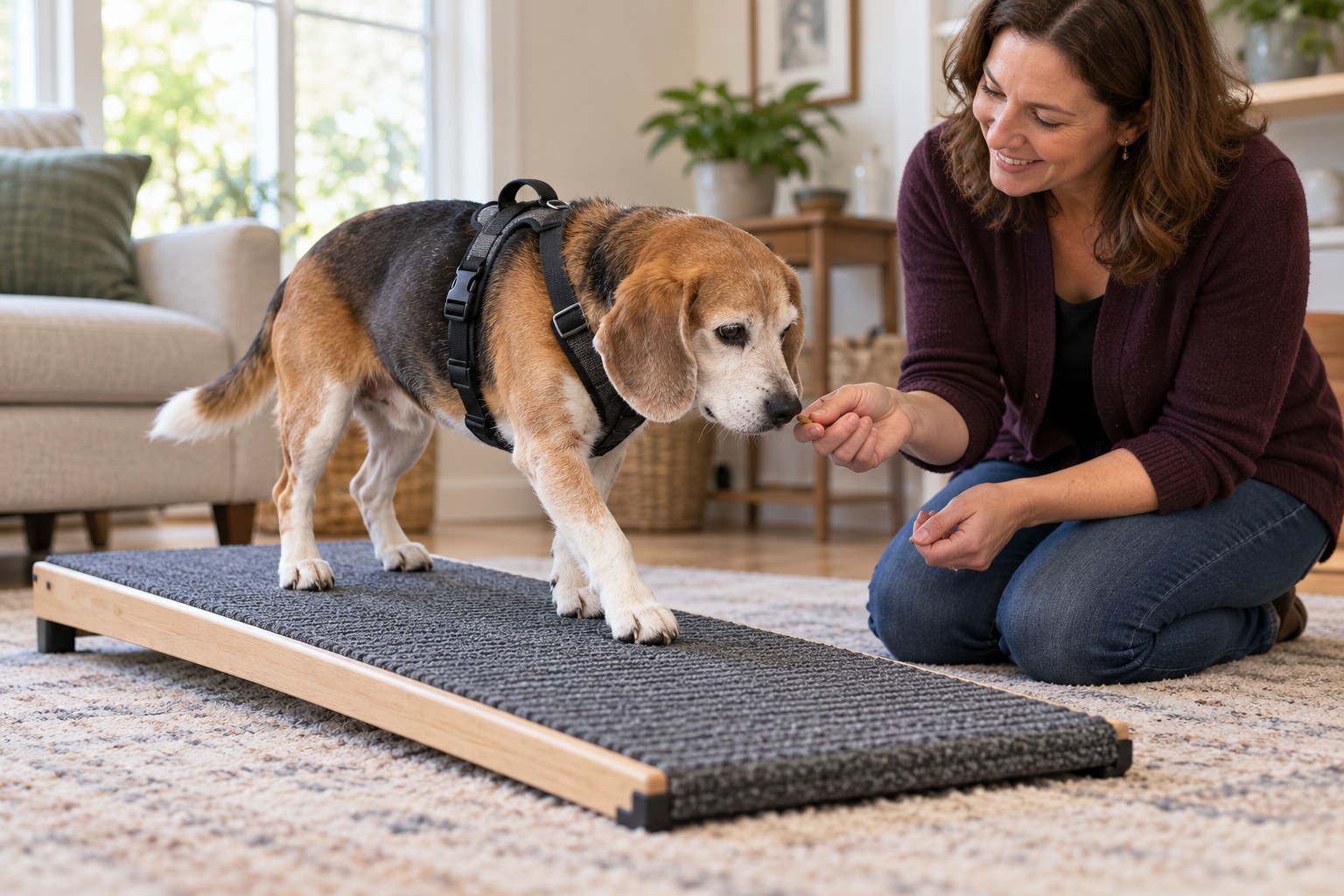
AI-generated illustration of supervised ramp practice at home.
Do not assume a hesitant older dog is simply stubborn. Pain, stiffness or an unfamiliar step may contribute. Ask your veterinarian about new or persistent difficulty, and introduce a stable ramp or appropriate assistance at your dog's pace.
In this guide
Notice the change
A dog that once jumped easily may hesitate, limp, move stiffly or struggle to lie down. These signs can have several causes; they do not establish an arthritis diagnosis. Note when the difficulty started and contact your vet, particularly if discomfort persists. Sudden severe pain or inability to stand warrants urgent veterinary attention.
Practise a ramp away from the car
Blue Cross suggests ramps to help older dogs access a car. First place a stable, nonslip ramp flat on the floor. Let your dog approach voluntarily and reward small steps. Keep sessions short. Gradually introduce a gentle incline only when comfortable; never pull or push a reluctant dog onto it.
Prepare the parked car
Park on level ground away from traffic and attach the ramp according to its instructions. Check its load rating, grip and secure contact at both ends. Keep the dog on a suitable leash with a supervising adult. A ramp must reach the actual entry point without a gap; if the route into the car seat remains awkward, stop and seek a better arrangement.
Make the resting space accessible
Choose enough usable space to sit, turn and lie comfortably, without climbing over a high wall. Follow the restraint and car-seat instructions and use an appropriate vehicle restraint. Soft padding may support comfort but does not demonstrate collision protection. Avoid loose stacked cushions and adjust only while safely parked.
Plan for getting out as well
Allow time for a controlled exit onto a stable surface and keep the lead secured before opening the door. Short trips and breaks can be adjusted to the dog's individual needs. If lifting or a support harness is necessary, ask a veterinarian or rehabilitation professional how to assist safely. Never force movement through pain or give human pain medication without veterinary direction.
Common questions
Does a raised seat treat joint pain?
No. Height or cushioning is not a treatment or proof of crash protection. Your vet can assess pain and recommend a suitable travel plan.
What if my dog refuses the ramp?
Return to an easier flat-floor exercise without pressure. Ask your vet or a qualified trainer for help, especially if pain is suspected.