A Comfortable Window View: Setting Up a Dog Booster Seat
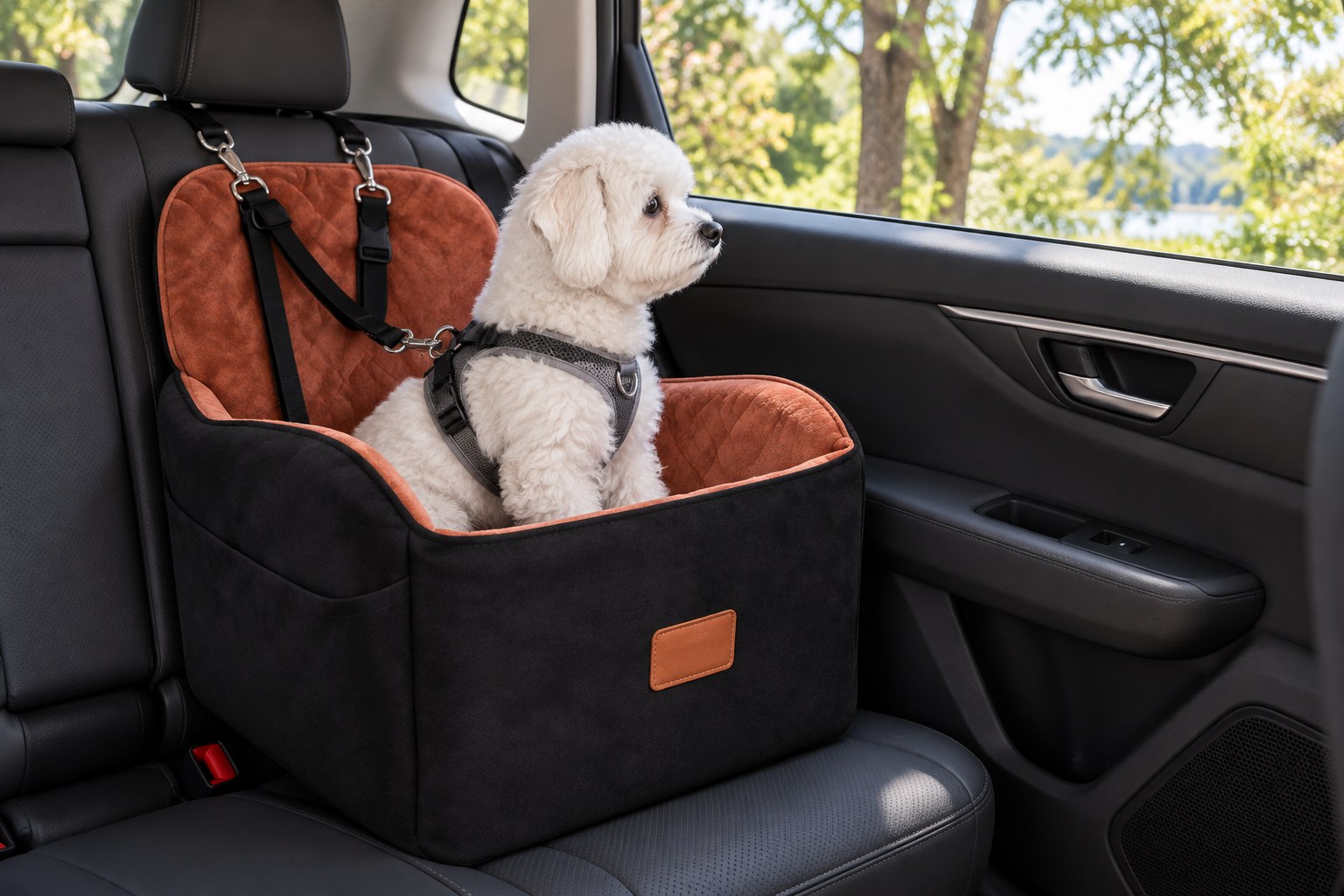
AI-generated product scene. Illustrative, not installation instructions or a crash-test demonstration.
A window view can be an enjoyable part of a ride for some dogs. Choose a seat that also lets your dog lie down comfortably, and judge the setup by your dog's response rather than height alone.
In this guide
A view your dog can choose
A dog may sit up to watch trees and houses, then curl up when the novelty fades. Other dogs prefer a quieter position with less passing scenery. There is no single best view for every dog. Treat looking out as an option, not a goal your dog must meet. Owner comments about enjoying the view are useful observations, but they do not establish that a booster seat treats anxiety or motion sickness.
Check the window line in your own car
Before a trip, park and secure the vehicle. Install the seat exactly as its instructions describe, then check where your dog's eyes sit in a natural posture. Window heights vary between cars, so a cushion that works in one vehicle may give a different view in another. Avoid adding loose pillows or stacking cushions to reach the glass. Extra layers can change the fit and the way the seat attachments work. Confirm the complete setup with the product instructions.
Leave room to stop watching
The Rofamily 004S shown here has a raised cushion, a padded interior and a high backrest. Its useful question is simple: can this particular dog settle inside it? Check the usable floor area with the cushion in place. Your dog should not have to balance on an edge to see out or squeeze into a position to rest. In a parked car, observe whether the harness and restraint arrangement allow a natural resting posture without tangling. Comfort padding alone does not establish collision protection.
Keep the view inside the cabin
Use an appropriate vehicle restraint and follow its instructions. Keep your dog's head inside the car; closed windows allow a view without exposure to flying debris. Keep window controls out of your dog's reach. A comfort-seat tether should not be assumed to be a crash-tested restraint.
Try a short outing, then reassess
Introduce the arrangement while parked, then build up short trips gradually. After each outing, note whether your dog chose to look outside, lay down or repeatedly tried to move elsewhere. Compare similar short routes before changing one element, such as seat placement or cushion configuration allowed by the manufacturer. A passenger can observe; the driver should stay focused on driving. If rides repeatedly cause distress or vomiting, discuss the problem with your veterinarian.
Does sleeping mean the seat is working?
Resting can be part of an enjoyable journey, but a photo of a sleeping dog does not prove a medical benefit or protection in a crash. Look for a practical combination: a properly secured setup, enough usable space, and a dog that can change between watching and resting without struggling. The aim is a familiar place for the ride, not a promise that every dog will sleep.
Sources
- VCA: Road Trips and Car Travel With Your Dog (window and restraint guidance)
- AAHA: How can my pet have stress-free veterinary visits? (gradual travel familiarization)