How to Check Your Dog’s Resting Space on a Long Car Trip
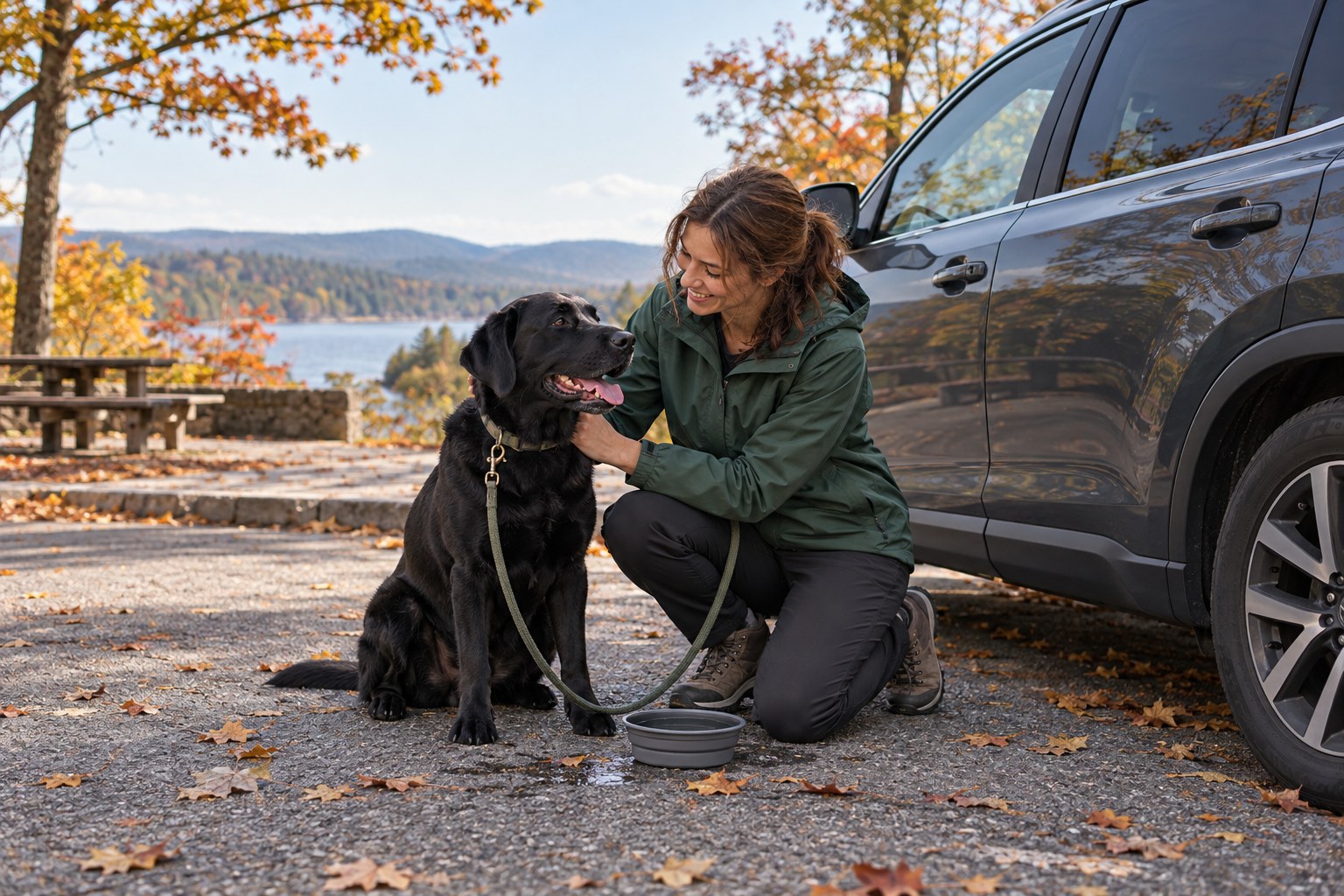
AI-generated illustration of a supervised rest break outside the vehicle.
Before a long trip, check that your dog can sit and lie in a natural position with a correctly fitted restraint. Recheck at stops, offer water and adapt the plan to your dog; a padded bed alone does not establish crash protection.
In this guide
What one customer’s journey can—and cannot—tell us
In an Amazon feedback screenshot supplied to us, one customer said their dog was content in a car bed during a two-day trip and felt the size suited their dog. The screenshot does not establish the exact model. This is one person’s experience, not evidence that any particular product will work for every dog or protect in a crash.
Check usable space before loading
Measure the dog in a relaxed lying position and compare that with the usable interior of the travel space, not just the outside dimensions. In a parked car, check whether the dog can sit and lie naturally without pressing against a rigid edge. Fit varies with the dog, vehicle and equipment; do not assume a weight label alone guarantees a fit.
Keep the restraint and resting area compatible
Use a suitable vehicle restraint or secured carrier, following the vehicle and equipment instructions. A comfort bed or its tether is not automatically a crash-tested restraint. Ensure straps are not twisted or pressing on the neck, and keep access to buckles clear. If the arrangement cannot be fitted as instructed, stop and seek advice before travel.
Reassess on the road, but only while stopped
Plan safe breaks for water, toileting and movement; individual dogs need different intervals. A passenger can observe the dog while the driver concentrates on driving. At a stop, look for shifting bedding, pressure points or difficulty settling, and correct them before setting off. Never leave a dog alone in a parked car.
Watch for discomfort and plan an easier next leg
Drooling, vomiting, persistent panting or restlessness can have several causes, including motion sickness or overheating. Stop safely and contact a veterinarian if concerned; urgent or severe symptoms need prompt veterinary help. Record what you noticed and adjust the next leg rather than expecting a bed to solve the problem.
Common questions
Should I choose a seat solely by my dog’s weight?
No. Check the manufacturer’s limits as well as your dog’s measurements, usable space and vehicle fit.
Can my dog sleep for the whole drive without a break?
Do not assume sleep removes the need for water, toilet and movement breaks. Plan around your dog’s needs and veterinary advice.
Related: Planning rest stops · Choosing a suitable size
Sources
- RSPCA Australia: Road trip preparation with a dog (accessed 31 October 2026)
- ASPCA: Travel safety tips (accessed 31 October 2026)