Is It Normal for a Dog to Sleep During a Car Ride?
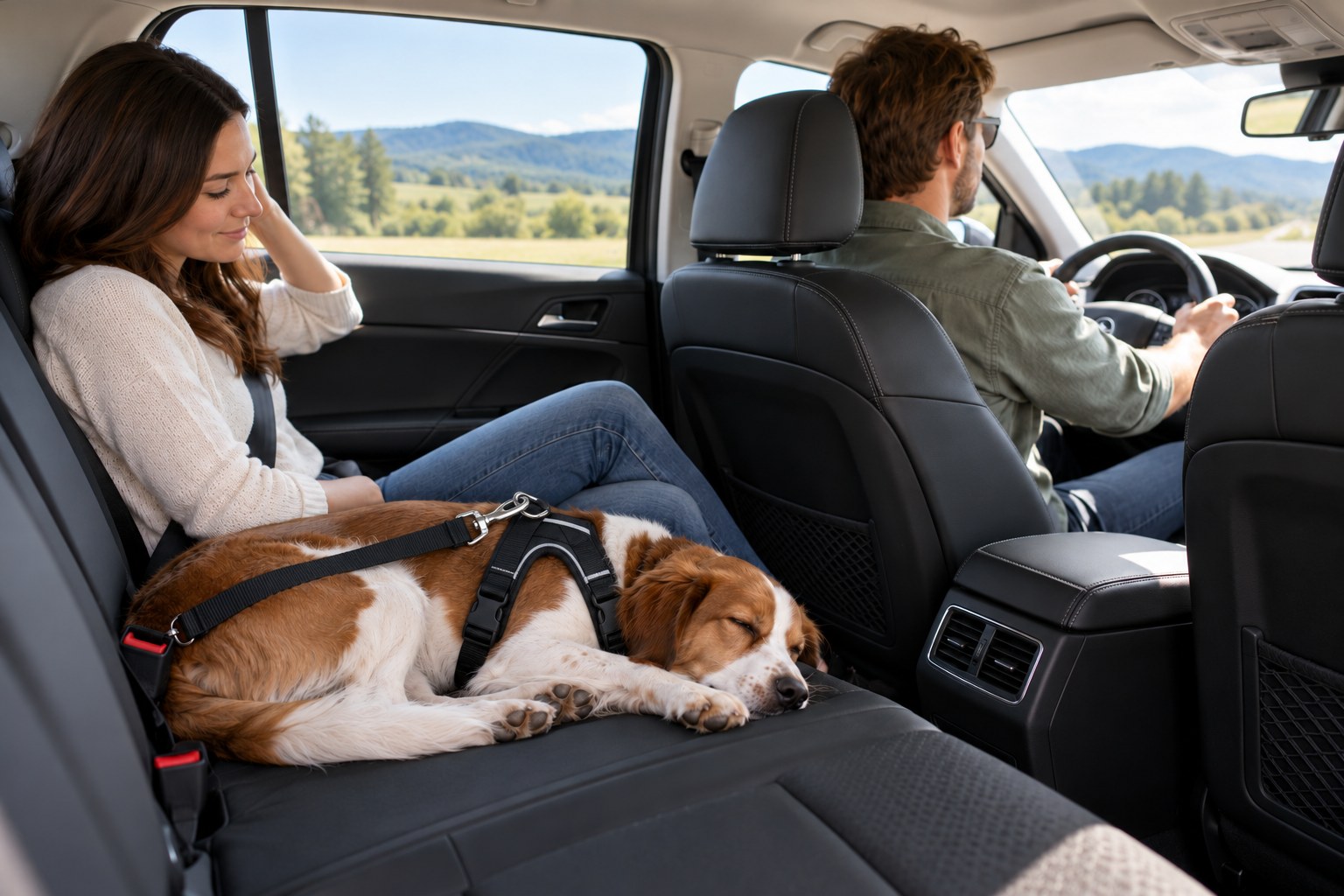
AI-generated illustration of a passenger monitoring a sleeping dog during a car ride.
Many dogs doze once the ride feels familiar, but sleep alone does not prove that a dog is comfortable or anxiety-free. Look at the whole pattern: posture, breathing, temperature, responsiveness and whether warning signs appeared before the dog became still.
In this guide
Start with the whole body, not closed eyes
A relaxed dog usually settles into a natural posture, keeps facial muscles soft and breathes evenly. It may change position, briefly wake when the car stops and respond normally to a familiar voice. A dog that is very still after prolonged drooling, repeated lip licking, whining, pacing or vomiting may be feeling unwell rather than simply sleepy. VCA lists these behaviors among common signs of canine motion sickness. Observe the sequence of events instead of treating closed eyes as a comfort score.
Let a passenger monitor the dog
The driver should keep attention on the road. When another adult is present, that passenger can occasionally check that the dog's position remains clear of straps, that breathing looks normal and that the cabin is comfortable. If travelling alone, make checks only after stopping safely. Do not wake a resting dog repeatedly just to test it. A normal response during a planned stop is more useful than constant interruption.
Keep the cabin comfortable and the dog secured
Use an appropriate carrier or dog restraint according to its manufacturer's instructions, and confirm the dog can adopt a natural resting position without a connector crossing the neck or limbs. A comfort seat or included tether should not be described as collision protection unless supported by relevant independent testing. Maintain ventilation and a moderate cabin temperature. The AVMA warns never to leave a pet in a parked vehicle, even in shade or with windows cracked.
Know the signs that call for a stop
Pull over safely if the dog develops excessive drooling, repeated lip licking, restlessness, whining, vomiting, unusual lethargy, difficult breathing or trouble getting comfortable. Offer a calm, supervised break and reassess. AAHA advises addressing panting, drooling, whining or lethargy promptly during travel. Persistent or severe signs deserve veterinary advice; do not give human travel medicine unless a veterinarian has directed it for that dog.
Build calm rides gradually
For a dog still learning to travel, begin with quiet time in a stationary car and progress to short rides before longer journeys. VCA notes that conditioning can take days or weeks. Familiar routines and bedding may support comfort, but no seat can guarantee less anxiety or sleep. The goal is not to make the dog sleep. It is to create a predictable trip in which the dog can rest or remain quietly awake without signs of distress.
Common questions
Does sleeping mean my dog no longer has car anxiety?
Not necessarily. Sleep can accompany relaxation, but it is not a diagnosis. Compare it with the dog's behavior before, during and after the ride.
Should I wake my dog at every stop?
A gentle check of breathing, temperature and normal responsiveness is sensible. Avoid repeatedly disturbing comfortable sleep without a reason.