Can You Move a Dog Car Seat Between Cars? A Fit and Setup Checklist
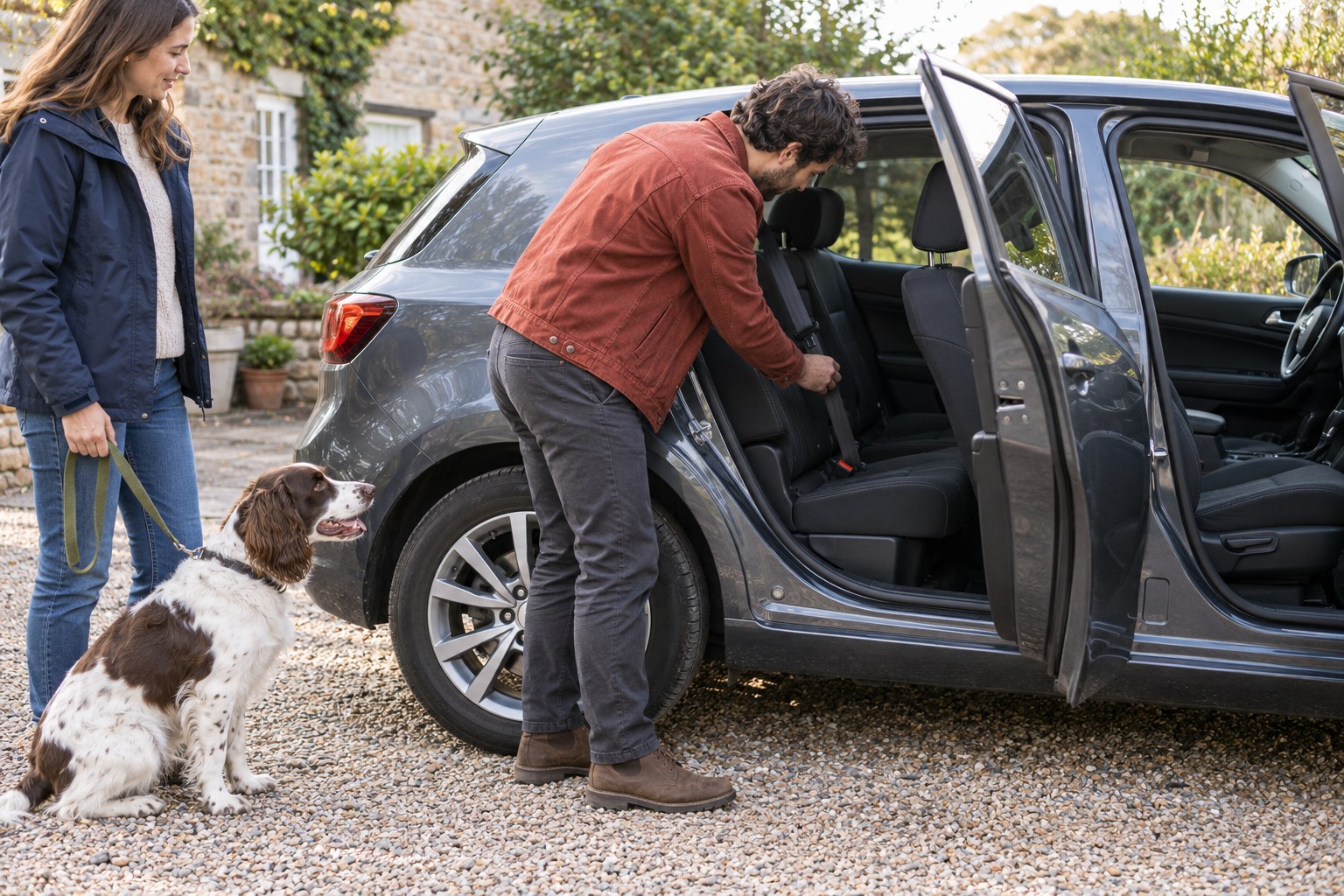
AI-generated illustration of checking a parked car; not installation instructions.
Often you can, but do not assume the second vehicle fits. Park first, read both manuals, and check dimensions, attachment points, restraint compatibility and your dog’s resting position. If the setup cannot be installed as instructed, choose another compatible arrangement.
In this guide
A question raised by one customer
In a supplied Amazon review screenshot, one customer described moving a pet seat between a small car and a larger truck. They felt it suited their dogs. The exact model and whether the dogs traveled together are not established; this individual experience does not prove that a seat fits every car or protects in a collision.
Measure the second vehicle
Compare the product’s dimensions and installation requirements with the available rear-seat space. Check seat contours, headrest design and clearance for doors and passengers. A snug appearance alone is not enough: if required straps or supports cannot be used as directed, do not improvise a mounting point.
Reinstall from the instructions
Follow the seat and vehicle manuals for the intended position, belt path and any approved attachment points. Check buckles are accessible and straps are not twisted. Do not route anything around an airbag or interfere with vehicle controls. If instructions conflict or the position is uncertain, contact the manufacturer before traveling.
Separate comfort from restraint
A padded bed or short comfort tether is not automatically a crash-tested restraint. Use a suitable fitted travel harness or secured carrier in accordance with its instructions, keeping the dog clear of airbags. Ensure the setup does not press on the neck or obstruct normal sitting and lying; never attach a restraint to a collar unless the manufacturer specifically directs it.
Try the new arrangement while parked
With the vehicle stationary, check your dog has usable space and that the restraint and seat do not interfere with each other. A passenger can observe on a short familiar trip; stop safely if the dog seems uncomfortable. Recheck each time the seat changes cars, and never leave a dog alone in a parked vehicle.
Common questions
Can I use the front passenger seat?
The AVMA advises keeping dogs out of a passenger seat equipped with airbags. Follow vehicle and restraint instructions for a suitable rear location.
Does a tight strap prove crash protection?
No. A secure-looking comfort seat is not evidence of crash performance. Check the restraint maker’s documented instructions and claims.
Related: Rear-seat installation · Resting space on long trips
Sources
- AVMA: Traveling with your dog or cat (accessed 1 November 2026)
- ASPCA: Travel safety tips (accessed 1 November 2026)