How to Choose the Right Dog Car Seat Size
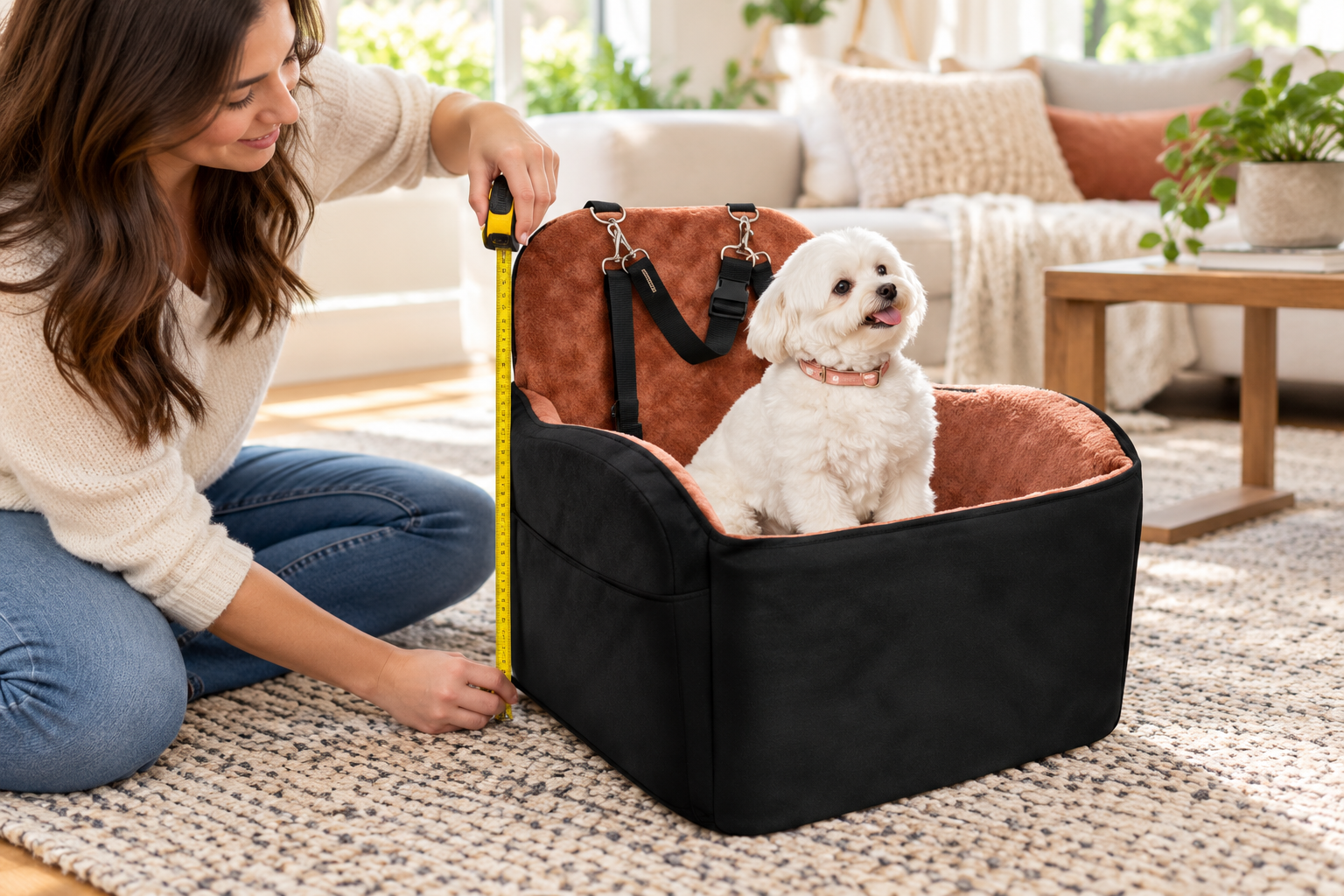
AI-generated scene using a Rofamily product reference. Illustrative, not an installation or crash-test demonstration.
Choose a dog car seat by usable interior space and vehicle fit, then check the model’s weight recommendation. Weight alone cannot tell you whether your dog can lie comfortably.
In this guide
Start with the way your dog rests
A dog who curls into a ball needs a different resting footprint from a dog who stretches out. Watch your companion settle on a familiar bed before choosing a travel seat. Measure the space they actually occupy, rather than guessing from breed or body weight. Keep your notes so you can compare models without relying on a product photo.
Measure your dog’s body length and shoulder height, then measure their normal lying footprint. Do this calmly at home. The result is a starting point for a comfortable fit, not an instruction to force a dog into a particular posture.
Compare interior dimensions, not the outside box
Thick side walls can make a bed look spacious while leaving a smaller resting area inside. Ask for the usable cushion dimensions as well as the overall footprint. Check that your dog can sit naturally and lie in a comfortable position without being squeezed by the sides.
A stated weight limit is one condition of selection, not a promise of room. Two dogs with the same weight can have very different proportions. For a puppy, revisit fit as they grow rather than buying an oversized bed and assuming it will work from day one.
Measure the vehicle too
Check the seat width and depth, the headrest arrangement and the route of the vehicle seat belt. A bed that fits your dog may still overhang your vehicle seat or block a passenger buckle. Confirm compatibility with the instructions for both the pet product and the vehicle.
If another passenger shares the rear bench, measure their required seating space separately. Do not cover their belt latch, push them against a door or assume a large bed can safely occupy part of their seat.
Keep comfort separate from crash protection
A booster cushion raises a dog’s position and may provide a clearer view. Its height does not establish crash performance. Soft padding, a headrest strap and an included tether should not be treated as proof of an independently tested restraint system.
Check the exact model and size of any crash-tested travel equipment, and use only its approved installation. Do not add an unapproved cushion, tether or adapter to a tested system.
A practical Rofamily fit check
Rofamily’s collection includes small booster seats and larger resting spaces. Collection-level guidance is not a specification for every SKU. Send your dog’s measurements and your vehicle seat measurements to cici@rofamily.com to request exact model information.
Before committing to a size, ask whether the cover is removable, whether the usable cushion dimensions are available and whether the return terms allow a fit check. A suitable seat should fit the dog, the car and the way your family actually travels.
Common questions
Is a seat’s weight limit enough?
No. Check body measurements, usable interior dimensions and vehicle fit as well.
Can two small dogs share one bed?
Only if the exact model is intended for that use, both dogs have adequate room and the travel equipment is appropriate for each dog.
Further reading
These sources support general guidance. They do not endorse Rofamily or establish the performance of its products. Article text is newly written for this website.
General product and travel education. For health concerns, ask your veterinarian. Follow the exact instructions for your vehicle and travel equipment.