Dog Car Anxiety or Motion Sickness? What Owners Can Do
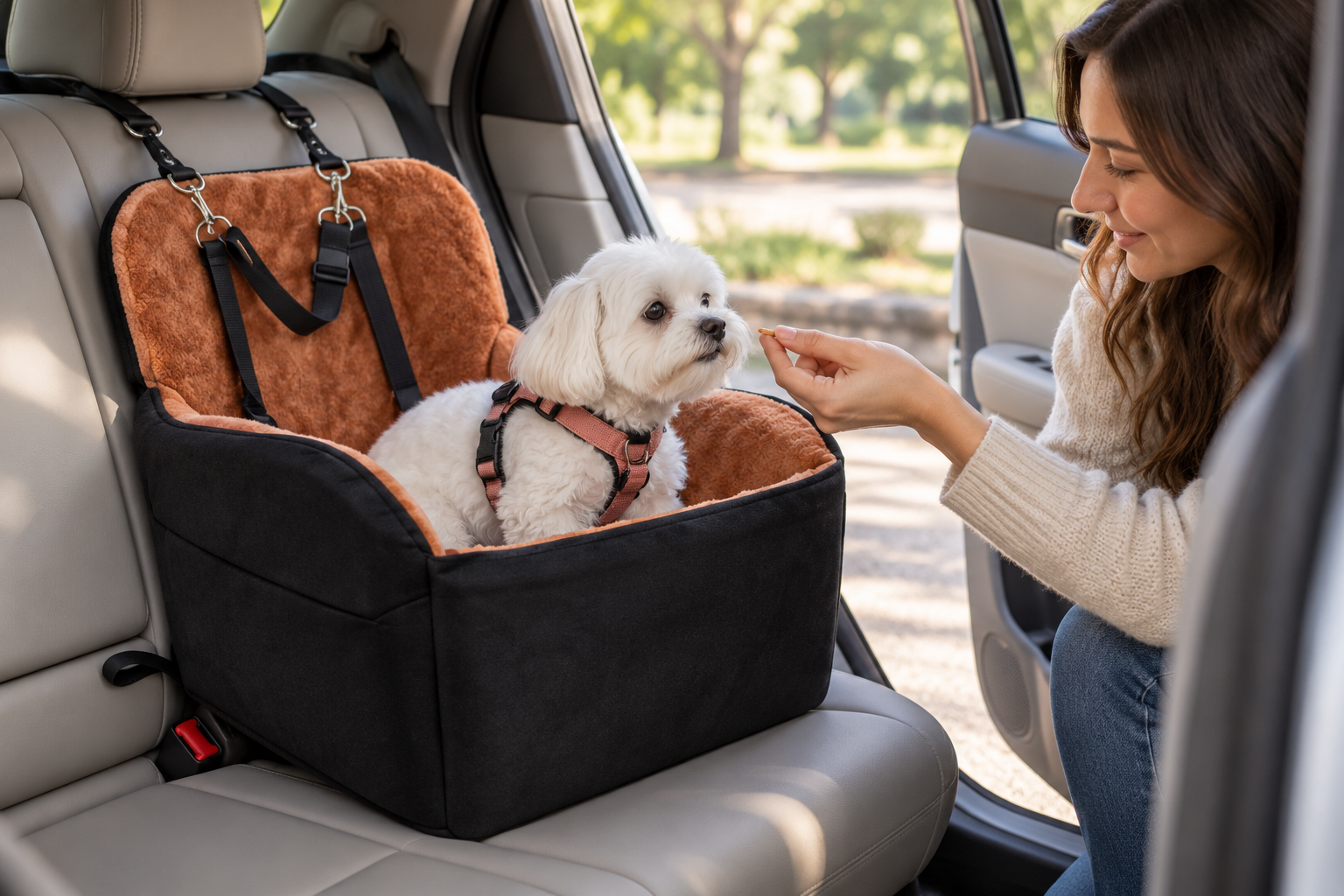
AI-generated scene using a Rofamily product reference. Illustrative, not an installation or crash-test demonstration.
Car anxiety and motion sickness can overlap. A familiar bed and gradual practice may support comfort, but a pet car seat is not a treatment for nausea. Persistent distress or vomiting needs veterinary guidance.
In this guide
Watch the whole journey, not only the vomiting
Some dogs hesitate near the car; others become uncomfortable only when it moves. Write down when the behaviour starts, how long it lasts and what you observe. These notes can help your veterinarian understand the pattern.
Avoid diagnosing the cause from one behaviour. Drooling, restlessness or reluctance can have more than one explanation. A dog may also learn to fear the car after an unpleasant trip. New or worsening symptoms deserve professional assessment rather than a new accessory alone.
Give the travel bed a familiar role at home
Let your dog explore the bed in a quiet room first. Reward voluntary contact and allow them to leave. A familiar resting surface can be part of the routine without becoming a place where the dog is forced to stay.
Keep the introduction simple. Do not change the bed, harness and travel routine all at once if you can avoid it. Rofamily’s mobile-bed idea allows the same resting space to be used between outings, but each dog’s response will be individual.
Make the parked car a separate training step
Begin at a distance from the parked car where your dog remains comfortable. A successful session might involve approaching the door and going home again. Work up to short, supervised time inside without immediately driving away.
Gradually introduce the equipment and ordinary car sounds. Let the dog’s response determine the pace. If a step brings obvious distress, reduce the difficulty. There is no fixed number of sessions that makes every dog ready for the road.
Do not promise a window-view cure
An elevated cushion can change the view from the bed. It cannot establish that motion sickness will stop or anxiety will disappear. Choose height for model suitability and comfort, and preserve the approved configuration of any restraint equipment.
Keep the dog inside the vehicle rather than encouraging their head out of a window. A photo of a dog enjoying a view is not clinical evidence. Progress is better judged by the dog’s overall comfort and the advice of the professional helping you.
Know when training needs veterinary support
If your dog repeatedly vomits, becomes severely distressed or struggles despite careful practice, speak with your veterinarian before a long journey. Ask about feeding timing, possible medical causes and whether treatment is appropriate for your dog.
Do not give human travel-sickness medicine or supplements on your own. A comfort bed can support a practical travel routine, but it cannot replace medical advice. Keep early trips short and manageable once your veterinarian and training plan indicate the dog is ready.
Common questions
Does a booster seat stop carsickness?
No reliable guarantee follows from seat height. Discuss ongoing nausea with your veterinarian.
Should I force my dog into the car to practise?
Avoid forcing progress. Use gradual, positive introductions at a level your dog can handle, with qualified support when needed.
Further reading
These sources support general guidance. They do not endorse Rofamily or establish the performance of its products. Article text is newly written for this website.
General product and travel education. For health concerns, ask your veterinarian. Follow the exact instructions for your vehicle and travel equipment.