A Dog Road Trip Checklist: Seat Setup, Stops and Packing
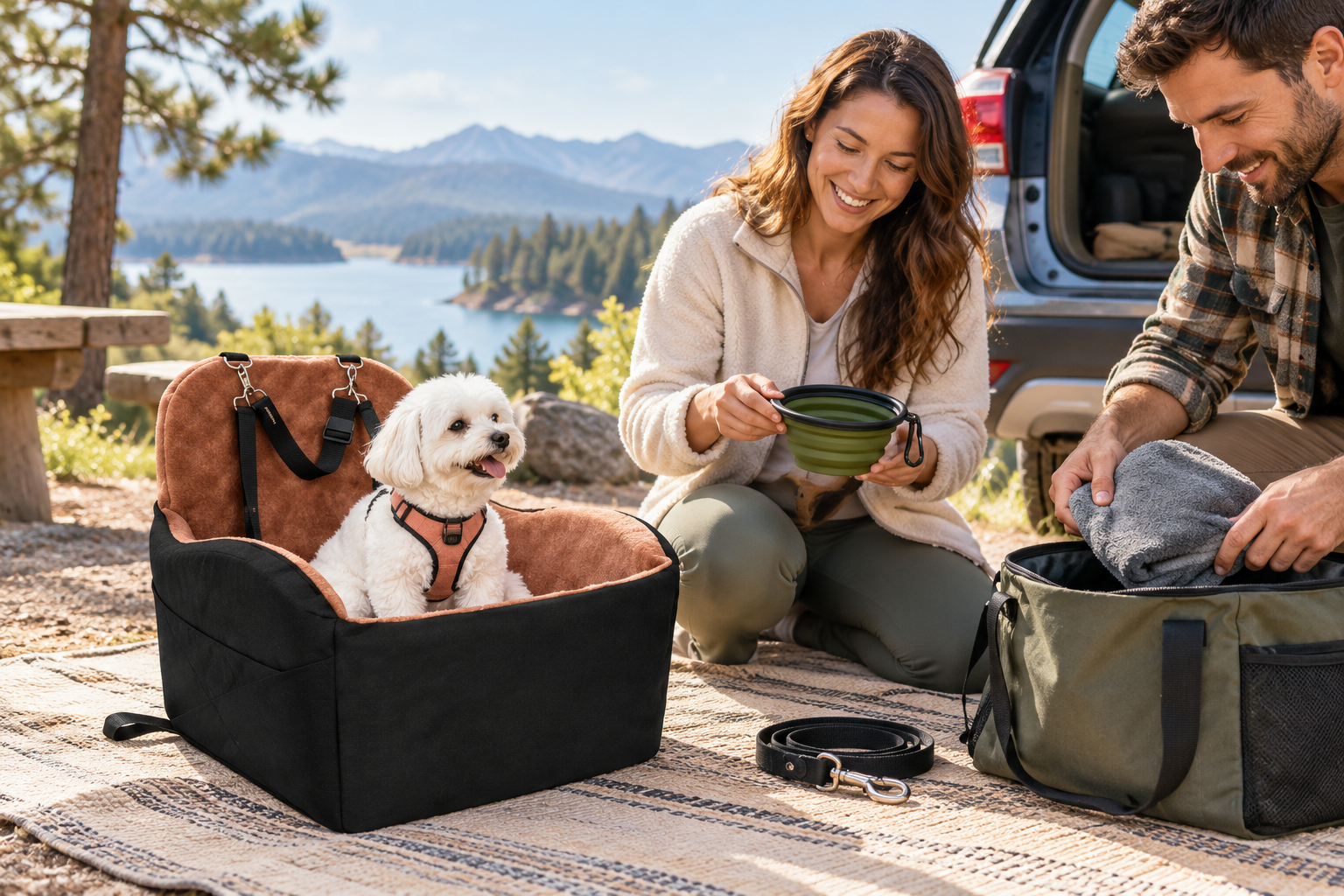
AI-generated scene using a Rofamily product reference. Illustrative, not an installation or crash-test demonstration.
Prepare the dog, the travel equipment and the route before a long drive. Check fit and attachment, bring water and identification, and plan supervised breaks that suit your companion.
In this guide
Test the routine before departure day
A road trip is easier to assess after a short practice outing with the same equipment. Check whether the dog can settle and whether an adult can load, attach and unload them without confusion. A new bed should not appear for the first time beside already packed luggage.
Use the practice trip to notice practical details. Can you reach the water bowl? Does the bed block a passenger buckle? Is the dog’s leash available before the door opens? Fix those problems at home rather than at a busy roadside stop.
Check travel equipment and loose luggage
Inspect the bed’s straps, cover, clips and base. Follow the exact attachment instructions and confirm the dog’s harness fit. Keep an included comfort-seat tether separate in your thinking from equipment with independent crash-performance evidence.
Secure luggage so it cannot shift into the dog’s resting area. If a restraint, carrier or crate has been independently tested, follow its approved configuration without adding unapproved padding or extensions. A familiar bed is useful only when the overall arrangement is suitable.
Pack for the ordinary mess
Bring water, a bowl, the dog’s regular supplies and a towel. Keep waste bags and a leash where you can reach them at a stop. Carry medication in its normal labelled packaging and follow your veterinarian’s directions.
Make identification easy to check before departure. Confirm that contact details are current and keep relevant health information accessible. Research nearby veterinary options along the route if your dog has ongoing needs. An organised bag saves time without requiring a large collection of travel accessories.
Choose stops around your dog
Plan places where your dog can get out with you, drink and take a suitable break. There is no single stop interval that suits every puppy, adult or older dog. Adjust for health, comfort, weather and the actual response you see during the journey.
Check accommodation pet policies before arrival, including any size restrictions or rules about leaving pets alone. Carry the same familiar bed into an approved resting space once the trip ends, where the product is suitable for home use.
Make arrival part of the plan
Unload the dog with a leash under adult control before unpacking distractions take over. Offer a quiet resting place and allow time to settle. Do not treat a tired dog’s reluctance as a training failure.
Rofamily’s mobile pet bed concept is intended to move between everyday settings. For a long trip, choose the exact model by interior room, vehicle compatibility and care requirements. Ask for dimensions in advance, and speak with your veterinarian about recurring nausea, anxiety or health questions before committing to the journey.
Common questions
How often should I stop with my dog?
Choose breaks around age, health, weather and comfort. Ask your veterinarian for guidance where your dog has specific needs.
What should I check the night before?
Check equipment condition and instructions, current identification, water access, the route and pet-friendly accommodation arrangements.
Further reading
- American Kennel Club: gradual car introductions and motion sickness ↗
- Center for Pet Safety: independently tested travel products ↗
These sources support general guidance. They do not endorse Rofamily or establish the performance of its products. Article text is newly written for this website.
General product and travel education. For health concerns, ask your veterinarian. Follow the exact instructions for your vehicle and travel equipment.